News Atlas — live world news feed

Live world news feed — headlines and images as they publish

Live headlines from top outlets — open a card for a preview, then read on the publisher’s site.

12 stories · Live feed

GuardianOct 1Preview

The Guardian view on the death penalty: Christa Pike’s execution was botched, but cruelty is inherent | Editorial

Three-quarters of nations have rightly abolished capital punishment in law or practice, but killing by the state has surged in the USWhat is the kindest way to kill? That’s the question being asked once more following Tennessee’s failed attempts to execute Christa Pike for the brutal murder of a classmate, Colleen Slemmer, when she was 18. The 50-year-old was taken to a medical facility, her condition unknown, with witnesses describing her snoring loudly around 40 minutes after receiving two injections of pentobarbital on Wednesday. It is the second botched killing in months, prompting Tennessee’s governor to order a halt to executions.Lethal injection was supposed to be the humane alternative to firing squads and electric chairs. They in turn were seen as an improvement on hanging, which looked much like lynching in a system disproportionately handing the death penalty to black men. The

EditorialCapital punishmentUS news

GuardianOct 1Preview

Phil Mickelson’s reps say he sought treatment for family trauma and addiction

Golfer has spoken of gambling issues in pastSix-time major winner has not played since MarchPhil Mickelson sought treatment earlier this year for “family trauma and addiction”, his representatives confirmed to multiple outlets on Wednesday.The 56-year-old golfer voluntarily entered a treatment facility and has since returned home. Mickelson’s representatives did not say when he sought treatment or how long he stayed at a facility. Continue reading...

Guardian sportPhil MickelsonGolf

GuardianOct 1Preview

Inside the undersea kingdom: the secret, sinister battle to control what lies beneath the waves

Every day, trillions of dollars, oil and gas and 99% of the world’s web traffic move through undersea pipelines that bear no state’s protection. With superpowers and corporations vying for control, should we be worried about this new wild west?On Christmas Day 2024, six weeks before Estonia, Latvia and Lithuania were due to disconnect themselves from Russia’s power grid, a Finnish engineer was just about to sit down to lunch when his phone rang. He was responsible for the Finnish side of the undersea cables that keep Finland and the Baltic states supplied with electricity, and one was malfunctioning. Within a couple of hours, authorities knew that a Cook Islands-registered tanker called the Eagle S, part of the shadow fleet carrying sanctioned Russian oil, in this case to Egypt, had sailed over the cable at the moment and location at which it had stopped working. The coastguard hailed th


Aida EdemariamBooksCulture

GuardianOct 1Preview

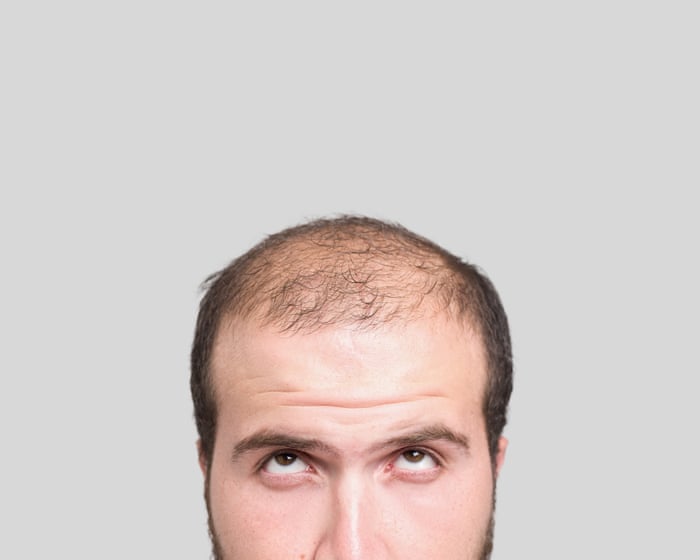
20 fascinating facts about hair: why baldness is super-masculine – and a pubic bush could be a ‘cheating detector’

Judy Wearing has spent much of her life studying our follicles. She explains how our armpits betray our emotions, why some gentlemen really do prefer blondes and the reason we evolved to have eyebrowsAs a PhD student at Oxford studying mating behaviour, Judy Wearing was suddenly struck by a thought: what was the purpose of pubic hair? The point of armpit hair? The function of each of our body’s furry patches? When the published literature failed to produce satisfying answers, Wearing began her own investigation. Her aim was to shed light on why exactly we evolved these particular patches, with pubic hair the most puzzling of all: was it for warmth, protection … or something else?Wearing is still tangling with those questions, some 30 years after her student days. Now an author and editor (largely in the education sector), she has revisited her fascination with hair in Anxious and Hairy:

Elle HuntHealthMen's hair

GuardianOct 1Preview

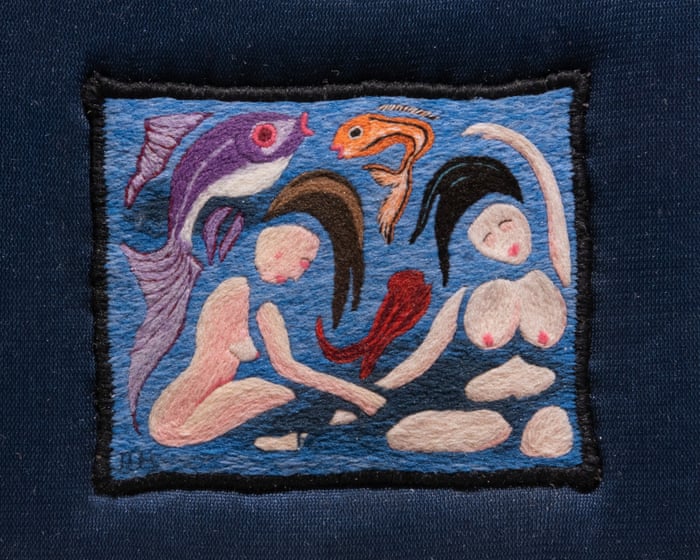
‘A saving gesture’: the art exhibition spotlighting US prisoners’ creations

A trio of shows at Michigan’s Grand Rapids Art Museum humanizes people who are incarcerated and celebrates the resilience of creativityWith nearly 2 million people behind bars, America is the global leader in incarceration. When you look at it per capita, we have the highest rate of incarceration of any independent democracy and rank fourth overall in the world, just behind El Salvador, Cuba and Turkmenistan.Despite these troubling numbers, mass imprisonment is largely invisible. “Our carceral system is something we as a society try to separate out from the everyday,” observes Terra Warren, an associate curator at Grand Rapids Art Museum, Michigan, who alongside curator Jennifer Wcisel brings audiences three solo shows from artists Julie Green, Gary Tyler and Ray Materson. They collectively aim to make us examine more closely just what prisons are doing to our society – and how art can p

Veronica EspositoExhibitionsArt

You’re caught up for now.